Polyaspartic floor coatings · Sun City, AZ
One-day floors that stay clear and colorful in the Arizona sun.
Polyaspartic coatings cure in hours, resist yellowing and stand up to hot tires — so your garage is back in service quickly and looks great for years.
What polyaspartic is, in plain terms
Polyaspartic is a modern two-part coating related to polyurea. When the two parts are mixed, they react and harden within hours rather than days. It was developed for demanding protective uses like bridges and steel structures, and it has become one of the most valuable materials available for residential garage floors.
Two qualities make it especially well suited to homes in Sun City. First, it is UV-stable. Traditional epoxy turns yellowish when sunlight hits it, sometimes within a single summer. Polyaspartic keeps its clarity, so the strip of floor nearest the door ages at the same pace as the corners in the shade. Second, it cures quickly, which means less time without your garage and fewer days of disruption.
You will often hear polyaspartic described as a “one-day floor.” That’s accurate for many garages: we can grind, repair, coat, broadcast flakes and apply the topcoat in a single visit, and you can walk across the floor the next morning.
Why polyaspartic is our go-to topcoat
Keeps its color
Resists the amber tint that standard epoxy develops in sunlight — essential for open-door garages and sunny patios.
Fast turnaround
Your garage is back in use in a fraction of the time a traditional multi-day system requires.
Hot-tire resistant
Stands up to tires coming in from summer drives without softening or lifting.
Scuff and stain resistant
A tough, slightly flexible film that resists cart tires, dropped tools, oil, fertilizer and household chemicals.
Comfortable to live with
Many polyaspartic products have relatively low odor, which matters in an attached garage.
Year-round installs
Can be applied across a wider range of temperatures than most epoxies.
How we use polyaspartic
In most of our garage floors, polyaspartic is the protective topcoat — the layer that takes the wear and faces the sun. Underneath it may be an epoxy or polyurea base, chosen for how well it bonds to your particular slab. This layered approach combines the strengths of each material.
For homeowners who need the garage back quickly, we build the entire system from fast-curing polyaspartic and polyurea products. That’s the true one-day floor. We also use polyaspartic to refresh older epoxy floors that have yellowed, and as a clear, textured topcoat on patios and entries that see direct sunlight.
Finish options
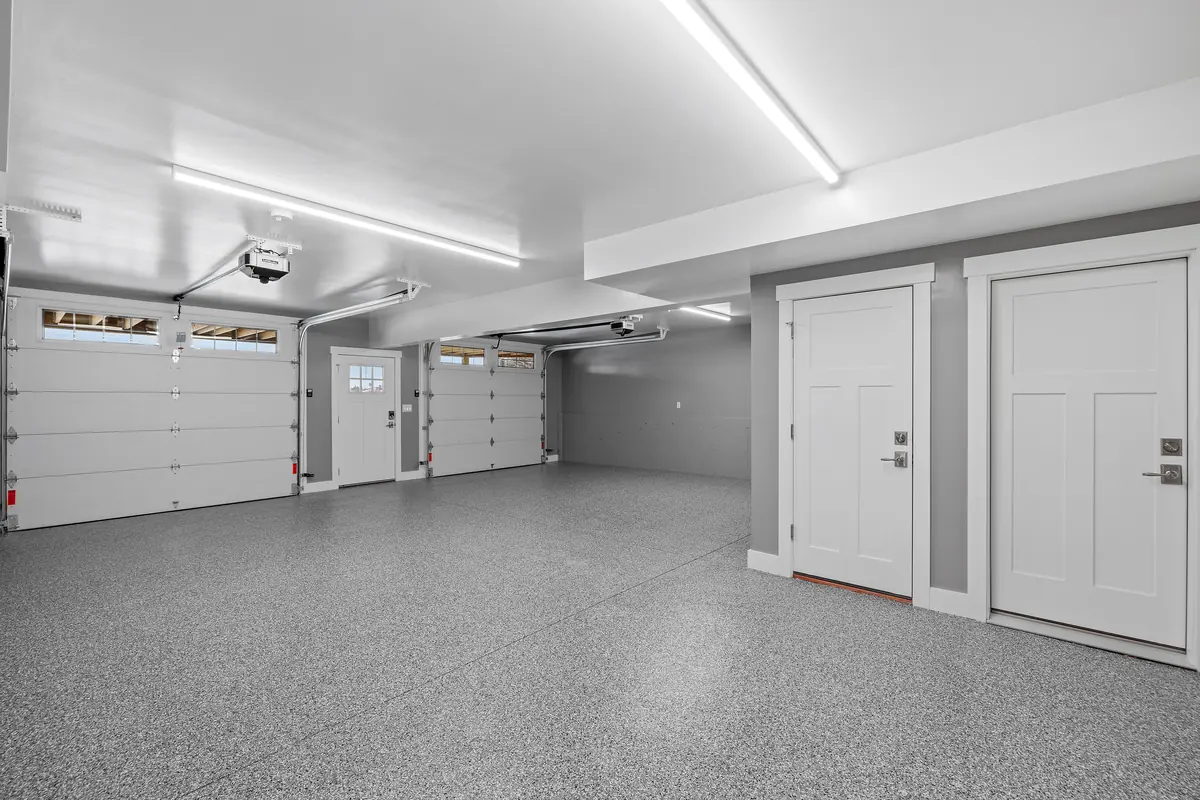
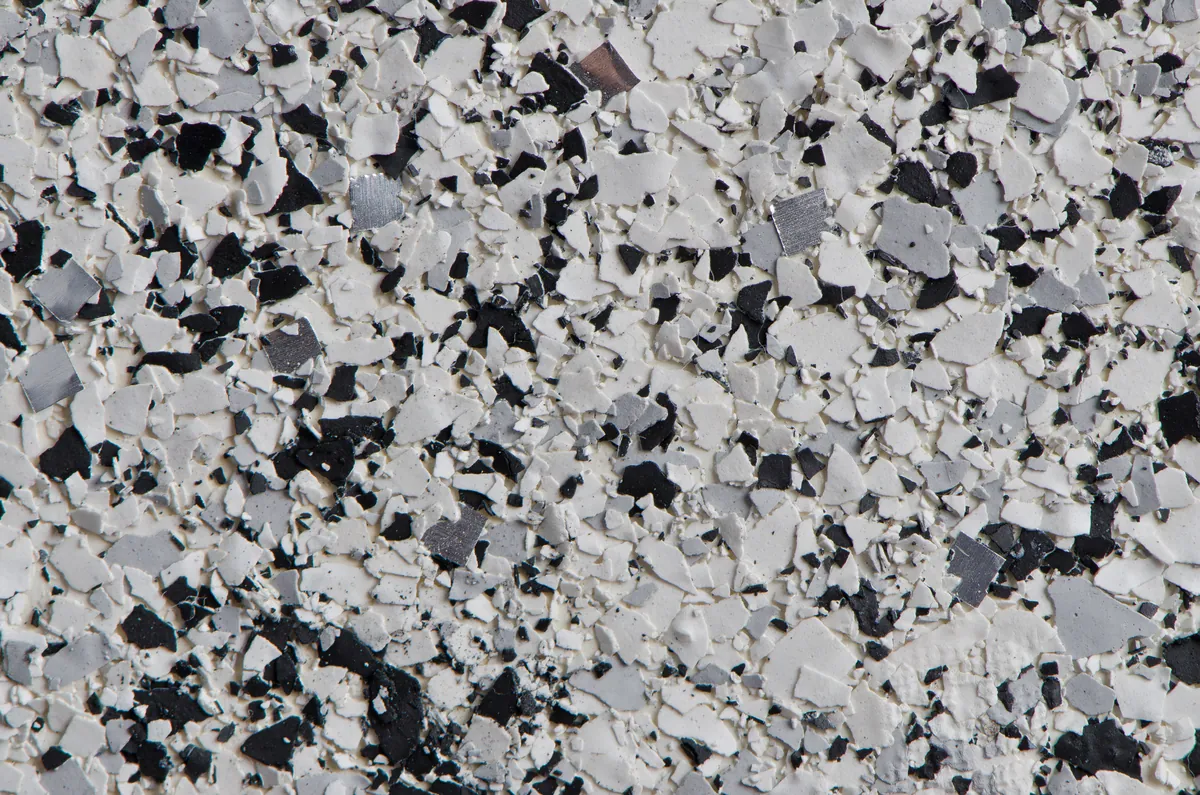
- Clear gloss over flake
- Our most popular choice. A deep, glossy finish that makes flake colors pop and wipes clean easily.
- Clear satin
- A softer sheen that reduces glare and hides fine scratches and dust. Nice for garages used as workshops or gyms.
- Tinted solid color
- A uniform, sun-stable color without flakes — clean and simple.
- Textured topcoat
- Fine grit mixed into the topcoat for extra footing at entries, ramps and around pools.
A typical one-day garage installation
- 1
Early arrival
We start early, especially in summer, so the concrete is as cool as possible when coatings go down.
- 2
Grinding and repairs
The slab is ground with dust collection running, and cracks are filled with fast-setting repair material.
- 3
Base coat and flakes
A fast-curing base is applied in sections, with flakes broadcast immediately.
- 4
Scrape and clean
Within an hour or two the base is firm enough to scrape off loose flakes and vacuum.
- 5
Clear topcoat
The polyaspartic topcoat is rolled on to seal everything in.
- 6
Back to normal
Light foot traffic is usually fine by evening or the next morning, with cars and carts returning in a few days.
Why this isn’t a do-it-yourself product
The fast cure that makes polyaspartic so convenient also makes it demanding to apply. After mixing, the crew may have only a handful of minutes to spread it, and a hot slab shortens that window further. Rolling too slowly leaves visible lap marks, and mixing too much at once means it hardens in the bucket. Consumer versions are slowed down considerably to make them manageable, which removes much of the benefit.
Our crews size each batch to the area being coated, measure slab temperature, and choose the right product speed for the season. That control is what produces a smooth, even topcoat on a one-day schedule.
Free in-home estimate
Thinking about polyaspartic floor coatings?
We’ll visit, look at the concrete, bring samples and give you a written estimate — no pressure.
Polyaspartic and the Sun City climate
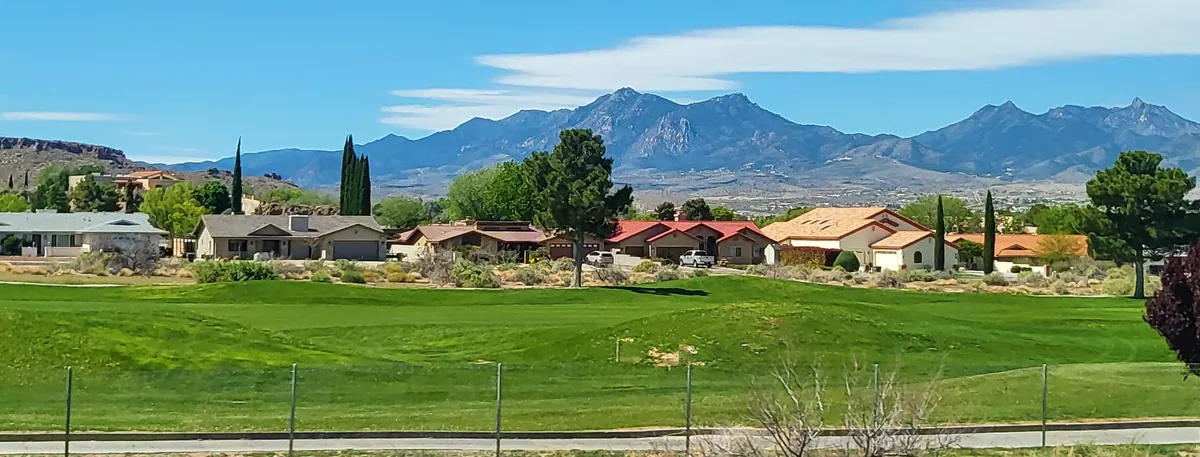
Few places put a coating’s UV resistance to the test like the low desert. Garage doors here are often open for hours while people come and go, tend the yard or work on projects, and that strong sunlight reaches well into the garage. A polyaspartic topcoat keeps your floor from developing a yellowed strip near the door.
Heat is the other factor. Summer slabs can be very warm, which accelerates curing. We schedule summer work for the early morning and use slower-reacting product grades to keep the finish even. In the mild winter months, faster grades help keep the project on a one-day schedule.
Polyaspartic also handles monsoon season well. Its dense surface sheds water and dust and cleans up quickly after a storm.
Refreshing an older, yellowed floor
If your garage was coated with epoxy years ago and has turned amber near the door, it may not need to be removed. If the original layers are still holding fast, we degrease, scuff-sand, patch any chips and roll on a new polyaspartic surface. A light scatter of new flakes can help blend old discoloration.
If the old coating is peeling or hollow-sounding, full removal is the better investment. We’ll tell you honestly which approach suits your floor.
Caring for a polyaspartic floor
Sweep or dust mop regularly, especially after windy days, because fine grit is what dulls a gloss finish over time. Mop with warm water and a pH-neutral cleaner when needed. Wipe up battery fluid, pool chemicals or fertilizer promptly. For tire marks, a mild citrus degreaser usually does the trick.
A small mat under the golf cart charger and in front of the workbench helps keep high-use spots looking new.
Is a one-day floor the right choice for you?
For many households the answer is a clear yes. If the garage holds your only car, or the golf cart is how you get to the course and the recreation center, losing the garage for most of a week is a real inconvenience. A one-day system keeps that disruption to a minimum.
There are a few situations where a multi-day system still makes sense. Slabs with significant moisture coming up through the concrete may need a specialty epoxy primer that takes longer to cure. Very large or complicated floors may simply need more time. And if budget is the main concern, a traditional epoxy base with a polyaspartic topcoat can offer excellent value. We’ll explain the trade-offs honestly so you can choose.
Getting ready for installation day
A little preparation makes the day go smoothly. Clear everything off the floor the day before, including items tucked under shelves. Move the car and golf cart to the driveway or street, and make sure the cart is charged so it can sit outside for a day or two. If you have a garage refrigerator or freezer, we can help plan where it will sit temporarily.
On the day itself, you’re welcome to stay home and go about your routine. We’ll keep the door to the house closed and ventilate the garage. Once the topcoat is applied, we’ll let you know when it’s safe to walk across, and we’ll put a reminder note on the door so nobody steps on it too early.
Questions we’re often asked
Is polyaspartic better than epoxy?
Each has strengths. Epoxy bonds well and builds thickness affordably; polyaspartic resists UV and wear and cures quickly. Most of our floors use both, with polyaspartic on top.
Is a floor finished in one day as durable as a slower system?
Yes, when properly installed. Durability depends on preparation and coating thickness, not on how quickly the materials cure.
When can I park my car?
Typically within a few days, depending on temperature and the specific system. We’ll give you exact timing before we leave.
Can it be applied in summer?
Yes. We start early in the day and use product grades formulated for warm conditions.
Will the smell bother me inside the house?
There is some odor during application. We ventilate the garage and keep the house door closed, and it fades quickly.
Can polyaspartic go on my patio?
Yes. It’s an excellent outdoor topcoat because it resists UV. We add texture for wet conditions.
Can you apply polyaspartic over my existing epoxy floor?
Often, yes. If the existing coating is still firmly bonded, we clean and sand it, repair any damage and apply a fresh polyaspartic topcoat. Peeling or loose coatings need to be removed first.
Does polyaspartic work on golf cart bays?
Very well. Its abrasion resistance handles the tight turns of cart tires, and it resists the chemicals that can drip from battery chargers.
Want your garage back in a day?
Ask about our one-day polyaspartic systems during your free estimate.